Commercial Building Appraisal in St. Thomas Ontario: Common Factors That Impact Value
A commercial building can look straightforward from the street and still be difficult to value properly. Two properties with similar square footage, similar age, and similar asking prices can produce very different appraisal results once the details are examined. That is especially true in a market like St. Thomas, Ontario, where local demand patterns, property use, access routes, tenancy quality, and redevelopment potential can all shift value in meaningful ways.
Owners often assume value rises or falls based mostly on market momentum. Market conditions matter, of course, but a commercial building appraisal in St. Thomas Ontario is rarely driven by one headline factor. Appraisers study the real estate itself, the income it can support, the risk attached to that income, and the local conditions that influence buyer behavior. The final opinion of value reflects judgment, not guesswork.
I have seen owners surprised in both directions. Some expect a high value because they recently completed cosmetic updates, only to learn that deferred roof work or weak tenancy offsets those improvements. Others worry their property has lost ground because of an older façade, yet the site value, zoning flexibility, or a long-term tenant can make the asset stronger than they realized. That is why context matters so much.
Why St. Thomas creates its own valuation dynamics
St. Thomas is not Toronto, London, or a generic small-city market. It has its own commercial corridors, industrial activity, traffic patterns, employment drivers, and development pressures. Its proximity to Highway 401 and the broader Southwestern Ontario logistics network can support certain industrial and service commercial values. At the same time, downtown positioning, neighborhood retail demand, and the scale of local business activity affect other asset classes differently.
A building on Talbot Street, for example, is appraised through a different lens than a warehouse in an industrial area or a mixed-use property with ground-floor retail and apartments above. The local pool of buyers changes. The likely tenant base changes. The expected rent, vacancy risk, and renovation requirements change too.
That is one reason commercial property appraisers St. Thomas Ontario tend to spend a lot of time on property-specific and neighborhood-specific analysis rather than relying on broad provincial averages. Local sales evidence is often limited compared with larger markets, so each comparable transaction must be adjusted carefully. A sale in London may offer some guidance, but it rarely transfers cleanly to St. Thomas without significant context.
The three lenses appraisers usually apply
Most commercial building appraisers St. Thomas Ontario rely on some combination of the cost approach, income approach, and direct comparison approach. The weight given to each depends on the property type and the quality of available data.
For an owner-occupied industrial property, the cost approach and comparable sales approach may carry more influence than a pure income model, especially if the building is specialized and there are few leased comparables. For a multi-tenant retail plaza, the income approach usually becomes central because buyers are purchasing cash flow as much as bricks and mortar. For vacant land or a redevelopment site, commercial land appraisers St. Thomas Ontario may focus heavily on highest and best use, servicing, zoning, and site utility rather than current income.
This matters because owners sometimes argue from the wrong framework. They point to a neighboring sale price without noticing that the neighboring asset had a stronger rent roll, lower capital expenditures, or more favorable zoning. Appraisal is not just about what another building sold for. It is about why it sold at that level.
Location still leads, but not in a simplistic way
Location remains one of the strongest drivers of value, yet “good location” means different things depending on the asset. For retail, visibility, frontage, parking, and traffic counts can have a direct effect on tenant demand and achievable rent. For industrial properties, truck access, turning radius, yard space, power capacity, and proximity to transportation routes often matter more than street-level exposure. For office buildings, tenant access, image, parking supply, and surrounding services can influence both occupancy and rental rates.
In St. Thomas, there can be a meaningful spread in value between properties that are only a few minutes apart. A site with efficient ingress and egress may outperform one on a busier road if left-turn access is poor or parking circulation is awkward. A building near established employment nodes may benefit from steadier business demand than one in a corridor with higher turnover. Even a well-maintained property can suffer if its location limits its practical use.
I once reviewed a file involving two commercial properties that owners considered near twins. On paper, the square footage was close, both had masonry construction, and both had been upgraded within the previous decade. Yet one appraised materially higher because it offered cleaner access for customers, stronger signage exposure, and a parcel shape that allowed easier expansion. The lower-valued property was not flawed in any dramatic way. It was simply less flexible, and buyers pay for flexibility.
Zoning, permitted use, and highest and best use
Zoning is one of the first filters in any commercial property assessment St. Thomas Ontario. It affects what the property can legally become, not just what it is today. A building occupied as office space may have hidden value if its zoning supports retail, medical use, or mixed-use redevelopment. The reverse is also true. A building may appear attractive physically, but if zoning is restrictive and legal non-conforming issues exist, the buyer pool can shrink quickly.
Highest and best use is the phrase appraisers use to describe the legally permissible, physically possible, financially feasible, and maximally productive use of a property. It sounds academic until it changes value by a wide margin.
Take an underutilized site with excess land. If zoning allows additional development, the site may be worth more than its current income stream suggests. On the other hand, a single-user commercial building with limited alternative use can be less valuable than owners expect, even if it is busy and well kept. Buyers look beyond current occupancy. They ask what happens if the present use disappears.
This is where commercial land appraisers St. Thomas Ontario are often called in for separate site analysis. Land value can diverge sharply from building value, especially where redevelopment pressure exists. A tired commercial structure on a strong site may https://pastelink.net/rp3kcktt derive much of its value from the dirt underneath rather than the existing improvements.
Building size, layout, and functional utility
Square footage matters, but utility matters more. Appraisers look closely at whether the space works efficiently for the most likely users in the local market. A 12,000 square foot building with awkward column spacing, poor loading, or chopped-up interior layout can be less marketable than a smaller building with clean, adaptable floor plates.
Functional utility often reveals itself in practical questions. Can trucks move through the site efficiently? Does the retail unit have enough depth and frontage? Are ceiling heights adequate for modern warehouse users? Can office suites be divided without excessive cost? Is there enough washroom, HVAC, and electrical capacity for the intended use?
These details show up in rent levels, downtime between tenants, and buyer confidence. A building that requires substantial reconfiguration is harder to underwrite. Lenders notice that. So do purchasers.
Older commercial buildings in St. Thomas can still command strong values when they have been adapted thoughtfully. Exposed brick and heritage character can help retail or hospitality uses, but only if the core systems support modern occupancy. Charm does not excuse poor functionality. A beautiful second-floor office without elevator access or sufficient parking may appeal emotionally while still suffering economically.
Physical condition and deferred maintenance
One of the most common points of tension in appraisal is the owner’s view of condition versus the market’s view. Owners naturally remember every upgrade. Buyers and appraisers look for what still needs attention.
Roof age, HVAC life expectancy, window condition, foundation issues, paving, drainage, sprinkler systems, accessibility compliance, and electrical service all influence value. Not every shortcoming leads to a dollar-for-dollar deduction, but serious deferred maintenance can widen capitalization rates, reduce comparable appeal, or force larger reserves in an income model.
A property does not need to be perfect to appraise well. Commercial buyers are used to some capital planning. What hurts value is uncertainty. If a roof has five to seven years of life left, that is manageable. If the condition is unknown, patchwork repairs are visible, and no records exist, a prudent buyer starts adding risk premiums.
This is one reason owners preparing for refinancing or sale often benefit from organizing maintenance records before the inspection stage. In practice, clear documentation can steady an appraiser’s view of risk. It does not create value from nothing, but it can keep the property from being penalized for avoidable uncertainty.
Income quality, not just income amount
For investment properties, rental income sits near the center of valuation, but headline rent is not enough. Appraisers examine lease terms, tenant strength, expiry schedule, inducements, vacancy history, and operating expense structure. A building generating $200,000 in gross annual rent may be weaker than one producing $180,000 if the first has short leases, high turnover, and landlord-heavy obligations.
The distinction between net and gross leases matters. So does the recovery of common area costs, taxes, insurance, and management expenses. A novice owner may point to total rent collected, while an appraiser focuses on stabilized net operating income, because that is what a purchaser is really buying.
Tenant quality can materially affect value in St. Thomas. A well-located property leased to established regional or national tenants on longer terms generally attracts stronger pricing than a similar building with small local tenants on month-to-month arrangements. That does not mean local tenants are weak by definition. Many are excellent. What matters is covenant strength, business stability, and the predictability of cash flow.
I have seen cases where a building with slightly below-market rent still appraised well because the tenants were sticky, the collection history was clean, and lease rollover risk was spread sensibly over time. Predictability has value. So does a rent roll that does not require heroic assumptions to maintain.

Vacancy, absorption, and local demand
Every appraisal must confront the same question: if this space became available, who would lease or buy it, and how long would that take? The answer varies by asset class and by micro-location.
Retail demand in one node of St. Thomas may be stable for service-oriented tenants such as clinics, personal care, or neighborhood food uses, while soft for discretionary retail. Small-bay industrial may attract steady interest if clear heights, loading, and yard access are decent, while outdated office space can face a thinner tenant pool and longer absorption periods.
Vacancy is not just a market statistic. It is a risk factor that influences rent assumptions, leasing costs, and investor appetite. When appraisers analyze a commercial building appraisal St. Thomas Ontario assignment, they are not simply measuring current occupancy. They are considering how durable that occupancy is under local market conditions.
Properties with divisible space often fare better because they can capture a wider range of users. A large single-tenant vacancy can take time to backfill, especially if the buildout is highly customized. That customization may have suited the outgoing tenant perfectly while limiting everyone else.
Sales comparables and why adjustments matter so much
The sales comparison process sounds simple from the outside. Find similar buildings, compare prices, adjust for differences. In reality, this is where a great deal of appraisal skill shows up.
St. Thomas does not always offer a deep pool of near-identical recent commercial sales. That means appraisers may look across a broader date range, pull evidence from nearby markets, or blend sale data with income analysis. Every adjustment has to be defensible. Time of sale, occupancy status, building condition, lot size, location quality, and lease structure can all alter the relevance of a comparable.
A vacant owner-user building may sell on a price-per-square-foot basis that is not useful for a fully leased income property. A sale between related parties may need to be excluded. A seemingly strong comparable might have included excess land, seller financing, or a motivated purchaser willing to overpay for strategic reasons.
Owners sometimes become attached to one nearby sale they heard about through local business channels. Appraisers have to test whether that sale was arm’s length, whether the property was truly comparable, and whether market participants would rely on it. Professional skepticism is part of the process.
Land value, excess land, and redevelopment potential
Some of the most meaningful appraisal shifts occur when the site itself carries more value than the current building use suggests. This comes up with aging commercial buildings on large lots, corner parcels with strong exposure, and underimproved properties in areas where alternative use is gaining traction.
Excess land can enhance value, but only if it is usable. A surplus strip constrained by setbacks, grading, or access limitations may contribute less than owners expect. Conversely, a well-configured rear yard that allows future expansion, outdoor storage, or additional parking can change marketability in a real way.

Commercial land appraisers St. Thomas Ontario look carefully at frontage, depth, servicing, topography, environmental constraints, and development regulations. If the market sees the land as the primary asset, then the condition of the existing structure may become secondary. That can be difficult for owners who recently invested in interior upgrades, but market participants buy based on future utility, not sunk cost.
Environmental and regulatory issues
Environmental concerns can affect commercial value quickly, sometimes sharply. Past industrial use, fuel storage, dry-cleaning operations, fill quality, and unknown subsurface conditions all matter. Even the possibility of contamination can narrow the buyer pool until further investigation is completed.
The same goes for regulatory compliance. Fire code deficiencies, accessibility issues, outdated life-safety systems, and unpermitted alterations do not always kill a deal, but they can reduce value through cure costs and increased risk. In appraisal terms, uncertainty often creates a discount before exact remediation numbers are known.
This area deserves practical realism. Not every older building with a long operating history is environmentally impaired. But prudent appraisal practice requires awareness of uses that typically trigger closer scrutiny. Where reports exist, they become important support. Where they do not, assumptions may have to be stated carefully.
The role of financing conditions and investor sentiment
Commercial property value is never entirely divorced from credit conditions. When interest rates rise, debt service becomes more expensive, investor returns tighten, and capitalization rates may expand. That pressure can reduce value even if the property itself has not changed.
In smaller markets, financing sensitivity can be even more noticeable because buyer pools are often narrower to begin with. If lenders become more conservative on vacancy allowances, tenant exposure, or property condition, deals that looked workable six months earlier may underwrite differently. Appraisers take note of this through market evidence, not speculation.
Investor sentiment also shifts between asset classes. In one period, industrial may be favored for its utility and relative resilience. In another, well-located mixed-use properties may attract stronger interest because of diversified income. A sound commercial property assessment St. Thomas Ontario reflects those active market preferences as they appear in sales and leasing evidence.
What owners can do before the appraisal date
A well-prepared owner does not try to influence value through spin. The better strategy is to provide accurate, organized information that allows the property to be understood properly.
The most useful materials usually include the current rent roll, copies of leases and amendments, recent operating statements, tax information, a survey if available, records of major capital improvements, environmental reports if they exist, and any details about zoning or permitted use that may not be obvious from a casual review. If part of the building is owner-occupied, a clear description of how the space functions can help the appraiser analyze market rent and utility.
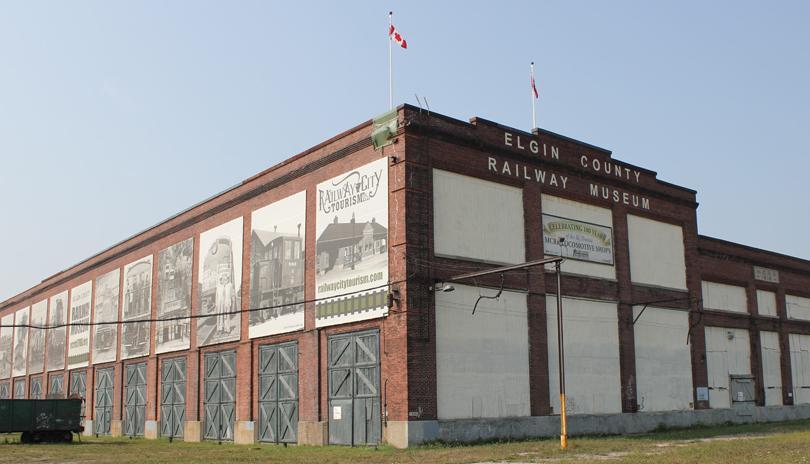
A brief property tour also matters. Pointing out recent roof work, upgraded electrical service, drainage corrections, or loading improvements can be genuinely helpful, especially when those items are not visible at first glance. The key is accuracy. Overstating quality or minimizing issues usually backfires because experienced appraisers notice inconsistencies quickly.
Why two appraisals can differ without either being careless
Owners are often surprised when one valuation does not match another exactly. Some variation is normal. Commercial appraisal involves interpretation of evidence, especially when comparable data is limited or market conditions are changing.
One appraiser may weight the income approach more heavily because the rent roll is strong and the leases are reliable. Another may place greater emphasis on comparable sales if investor sales evidence is particularly persuasive. Differences in capitalization rate selection, stabilized vacancy assumptions, or adjustments to older comparable sales can also move the result.
That does not mean appraisal is arbitrary. It means valuation is a professional opinion built from market data and reasoned judgment. The quality of the work depends on how well the appraiser explains that judgment and supports it.
For anyone hiring commercial property appraisers St. Thomas Ontario, that point is worth remembering. The goal is not to find a number that feels comfortable. The goal is to obtain a credible opinion that lenders, buyers, courts, accountants, or business partners can rely on.
A local market requires local judgment
Commercial valuation always lives in the details, and those details become even more important in a city like St. Thomas. A building’s value can turn on lease structure, zoning flexibility, access quality, site layout, remaining useful life of major systems, and the depth of demand for that particular property type. General rules help, but they do not replace local judgment.
That is why experienced commercial building appraisers St. Thomas Ontario spend so much time reconciling small facts. A few parking stalls can matter. So can a one-bay loading difference, a shorter lease term, an older rooftop unit, or a zoning category that quietly limits future options. None of those factors tells the whole story alone. Together, they shape what the market is actually willing to pay.
For owners, investors, and lenders, the practical lesson is simple. Value is not just about what the building looks like or what someone hopes it is worth. It is about utility, income, risk, and opportunity, all measured in the context of the St. Thomas market. When those pieces are analyzed carefully, the appraisal becomes far more than a formality. It becomes a grounded view of how the property will perform in the hands of a real buyer.